
ALTERNATIVE PROVISION
ALTERNATIVE PROVISION
TEACHING AND LEARNING
THINKING HARD
Think Hard is a national programme, showcased through The PiXL Club Partnership, we use to drive challenge all learners in the classroom. Our ethos of teaching and learning is based on our High Impact Teaching Strategies (HITS) and High Impact Learning Strategies (HILS) for students.
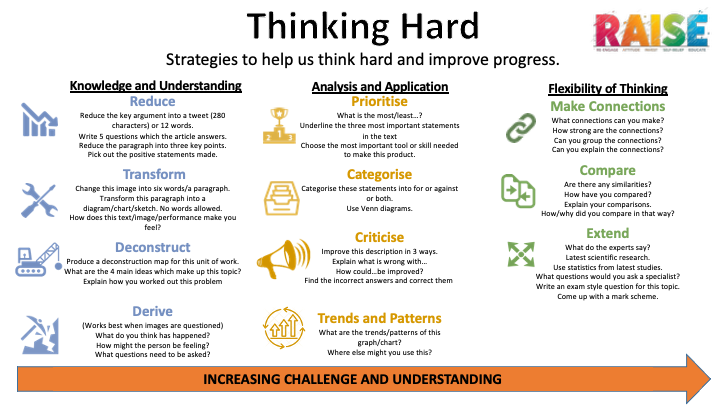
High Impact Teaching Strategies (HITS)
Our five High Impact Teaching Strategies (HITS) ensure challenge for all. These five strategies guide our reflections and provide a framework for our professional development and monitoring and evaluation. Each of the HITS are supported by reflective questions to support planning and development, key practical classroom strategies and a programme of professional development including research informed seminars and Professional Learning.
High Impact Learning Strategies (HILS)
To support our HITS, the High Impact Learning Strategies (HILS) are a toolbox of practical approaches to learning for all students. These strategies are grounded in research and provide students with a language, structure and the practical tools to develop true independence in their learning.
EXCELLENT TEACHING
The EEF toolkit of advice for excellent teaching has the following key pillars:

Quality Teaching First
Prior knowledge influences new learning
We learn what we think about
Working memory is limited when learning new knowledge
Fluency arises through practice over time
Assessment Principles
Purpose of assessment
What should be measured in subjects?
Validity of assessment and data
Assessment schedule
Post-assessment
Feedback
Purpose of feedback
Workload
Methods of feedback
Frequency
Literacy
Intent
Sequence
Vocabulary
Reading fluency
Strategies
YOUNG PEOPLE FIRST, PHILOSOPHY
RAISE-AP, at our heart is:
Amongst all these incredibly important points is the role of the teacher and support staff, academically – we owe our young people the best education we can, and for many of our young people we need to strive to close the educational and attainment gaps as best we can, so we give them the best chance in their next steps.
To do this, we require, amongst other key aspects of support, excellent teaching.
CURRICULUM
An effective curriculum sets out the journey that someone needs to go on to get better at the subject. What is it that causes a weaker / stronger performance? The curriculum models the progress that we would hope (although cannot guarantee) that someone will make.
The curriculum is our progression model.
We consider, with our RAISE-AP curriculum:
Why this content?
Why for our context at RAISE-AP / why for this cohort of students?
Why delivery at this time – sequence of what and when?
This links to the Ofsted intent (curriculum plan), implementation (how you teach and assess) and impact (outcomes for students).
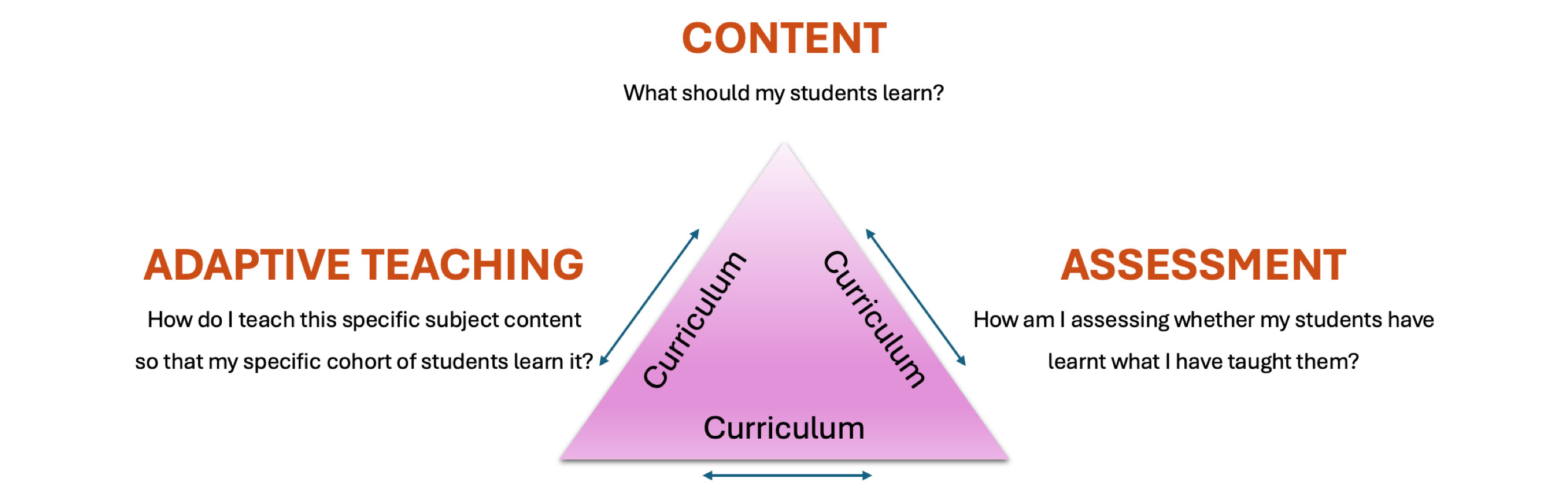
We consider how do you teach the specific subject content to the specific cohort. This needs to be considered! Adaptive teaching is very dependent on short cycle formative assessment, giving knowledge of the students’ learning which informs next steps (adapting to what is needed).
Adaptive teaching is all about noticing (who is finding it easy / difficult) and then taking the time and effort to adapt what is being done to assist students with their particular need…
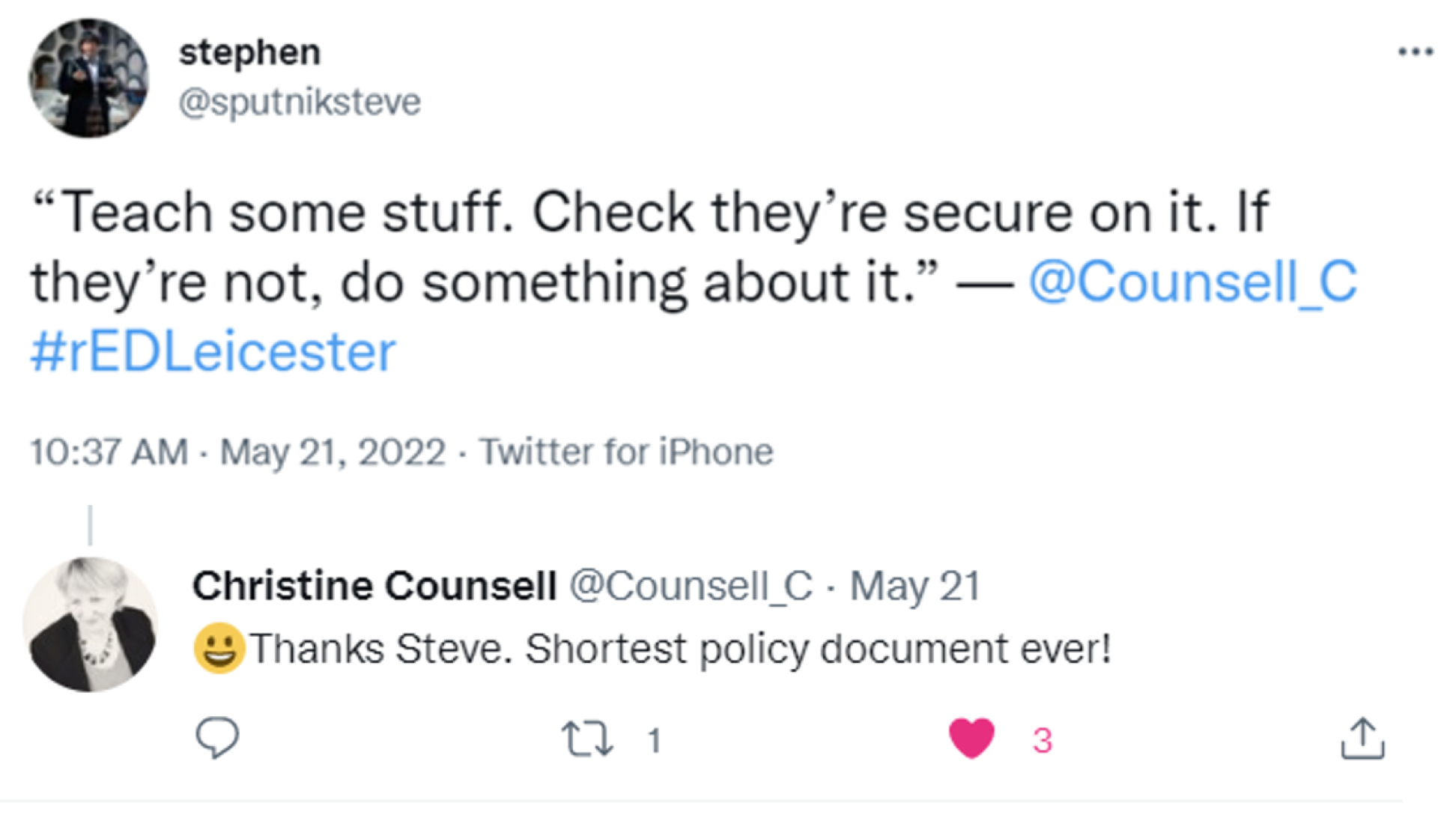
Assessment can be summarised as follows:
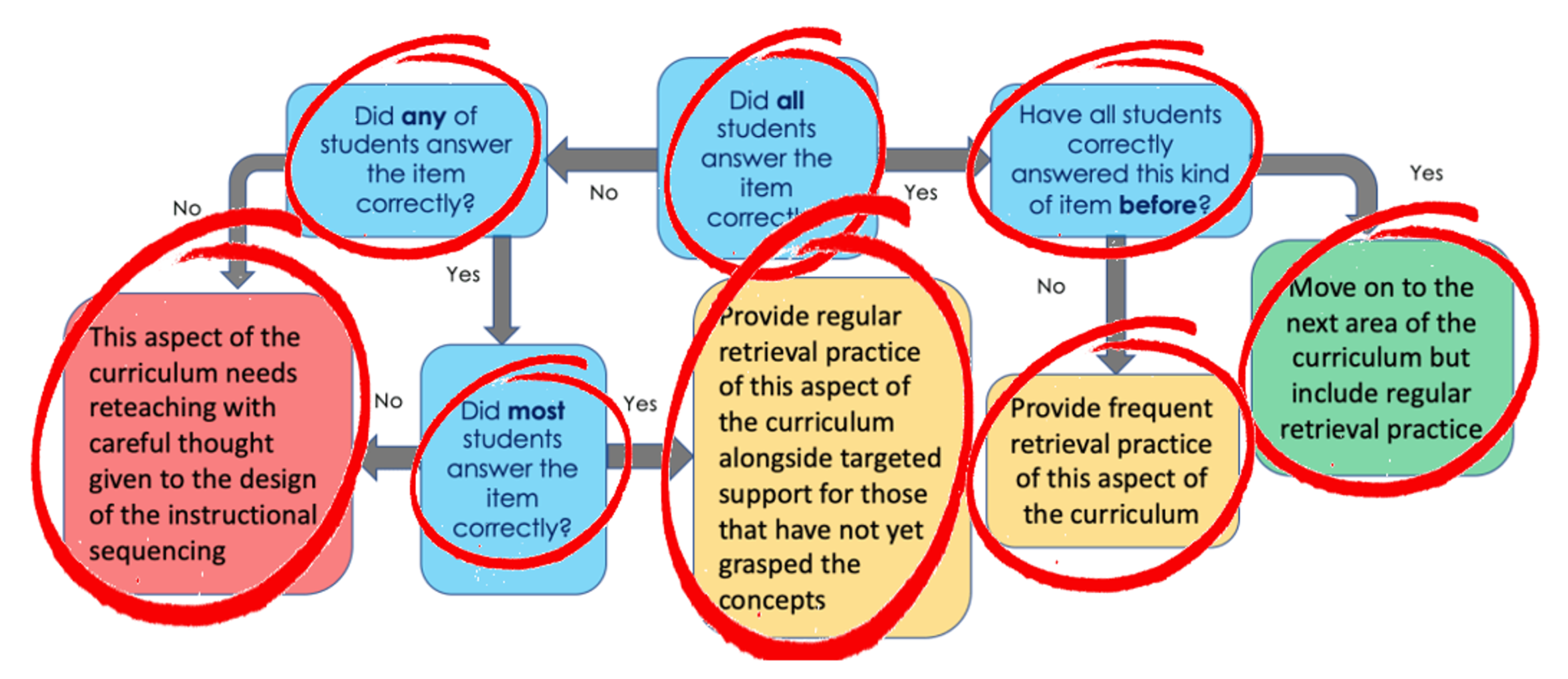
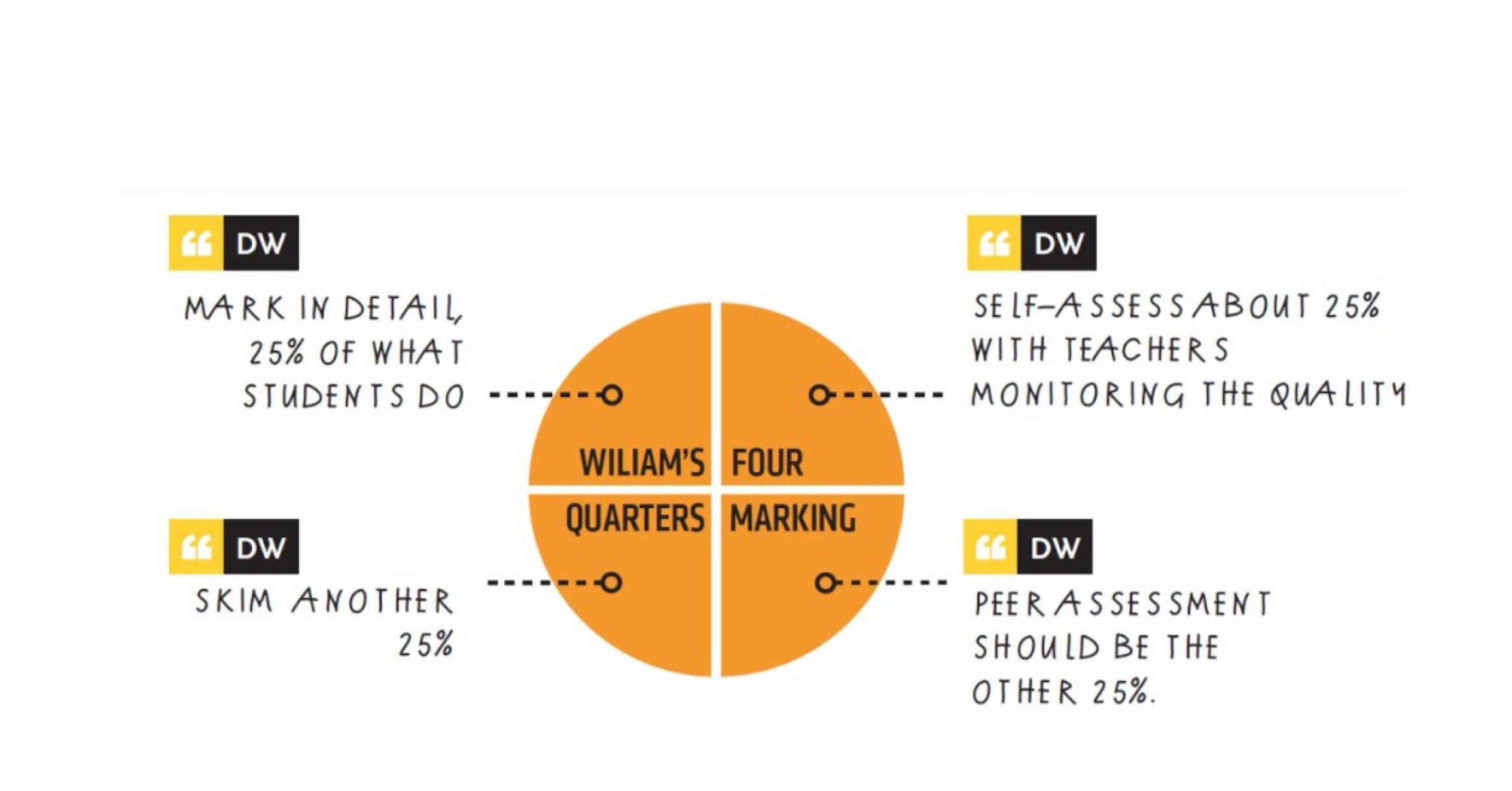
At RAISE-AP we follow Dylan Williams four quarters marking guidance:



RAISE-AP
SUITE 6, CRESCENT HOUSE
YONGE CLOSE
EASTLEIGH
HAMPSHIRE
SO50 9SX
Tel: 02380 201401
Email: contact@raiseap.co.uk
All rights reserved. © 2025 RAISE AP LTD.
This website makes use of cookies. Please see our information on this page for further details.